Populaire berichten
-
Douwe Tiemersma is vanochtend op 7 minuten over 5 overleden. We zullen hem als persoon en als leermeester missen.
-
Ik heb een week of 4 geleden deze teksten beluisterd. Ik ga het nog een keer doen. Hele mooie zomercursus van Alexander Smit. In 7 dagen, ...
-
Er heerst onrust in spirituele kringen. In het bijzonder binnen advaita georiƫnteerde groepen. Er heerst daar grote onrust en opwinding ove...
maandag 29 november 2021
Wetenschap en spiritualiteit
dinsdag 6 september 2016
The non-duality of experience. (Douwe Tiemersma)
Text Satsang
From an introduction and talk with Douwe Tiemersma, in Gouda,May 14, 2008
The non-duality of experience
Yes, we are always talking here about the recognition of non-duality. It’s clear: in practice you will need to recognize very clearly that non-duality is the reality if duality and its associated suffering is to dissolve. You should determine this very clearly within your own experience.
This is easiest in the feeling sense. You can become aware of your tactile sensibility. Imagine that the wind blows and that you experience the wind on your skin. Which reality is that? Now, what do you really experience? There is one sensation in which you no longer experience the skin and the wind separately. In your experience it isone phenomenon. You can think about it further, that it has two sides, your skin and the wind, but what you experience is onephenomenon. You don’t experience your skin and the wind separately. They have come totally together. Intuitively, instinctively* it is just one phenomenon. Just call it skin-wind. Do you experience that skin-wind feeling in space? Do you see that your bodily self and what is said to come from outside come totally together? The wind, it blows. As skin-wind you go along with it completely into the infinite distance. You must forcibly intervene in order to pull these two apart from one another. In the intuitive experience it’s only about that one: that feeling skin-wind. The wind is nothing without skin; the skin is nothing without wind. It is one phenomenon.
That’s also true with the sense of taste, when, in this wonderful weather, you eat an ice cream. What is it like then? “Oh, what a delicious taste – strawberries, bananas…” What is that like? How is it with yourself in relation to the taste experience and that which you are tasting? Isn’t that also only one? I recently read a Buddhist text on the idea of “one taste”. The interpretation then was that you experience everything in the same way. There is no preference and no denial. In the advaita approach we intend an even deeper meaning. In that one taste not only have the separations you make between the different experienced objects disappeared, but also between yourself, your experience, and the objects. Then there is not a separate “I taste” and “that which I taste”. Both have come together. There is one phenomenon of taste. Therefore this situation in which you confirm that one taste or that one feeling has the tendency to become universal. Why? Because there are no divisions any longer. You taste something, a strawberry ice cream. When you fully enjoy the taste, you easily enter into it. Then there is only one taste and that is universal. There is nothing else. You pick up the ice cream and there is still a distance; you bring it towards you, enjoy it and there is a merging of yourself and the ice cream. You taste a strawberry ice cream and you’re gone, the ice cream, too, is gone:one taste. What is the reality? You can’t say anything else about it, except that you and the ice cream are one. In this way you recognize non-duality on the sensory level: that’s how it is.
With hearing, separation also disappears. You hear beautiful music and you go right into it: the separation is gone. In going along, the “I hear/am the music” develops itself spatially and there arises a literally-infinite enjoyment. (There is the sudden sound of a fire engine). You hear the sound of the siren and you can’t say if it is somewhere outside, or if it is present within your own sphere. There is a non-duality.
Seeing is strongly dualistic, because seeing sets up something at a distance. Through this we in the West are very visually oriented, such that in that in our mentation everything exists at a distance. Duality reigns. But there is also another kind of seeing, an intuitively available feeling-seeing, in which distance is not present. When you see from your heart you notice that you are in and with the things that you see. You see the light of the sun and you let the light enter into you. Every distance is gone. Sun and self are no longer apart. From out of your heart then, you see that self-light everywhere. You see someone else from your heart. The distance disappears and you can immediately confirm: there is no duality with the other but rather a non-duality. You would need to act quite forcefully in order to keep the other at a distance. You’d have to strain yourself, by keeping your eye on the distance and perpetuating it: “I am here and the other is there”. When a little relaxation comes then you automatically sink down. You return to intuitively seeing from your heart and you see that separation disappears. In relaxation this happens automatically.
Keeping distance, that is tension. Take a look at what happens when you maintain such distance. Then there is a notion of yourself, separate from what you see, separate from the others that you see. The world, the others, are kept at a distance. What appears there, what you see, is not allowed to come too close to you, to enter into your territory. In this sense you create a wall. In this sense you make yourself hard. In the energy of this distancing-seeing sits the energy which keeps the other at bay. ‘I’ see ‘you’ there. Can you see the tension of this distance keeping with each objectification? This also applies to all kinds of possible events in the future that people tend to fear: they must be kept at a distance, all those less attractive possibilities. Take a look on the energetic level. Then you see that you, through your seeing, are immediately in the power of everything, especially the things which are less attractive, that you wish to avoid. So relaxation means acceptance, such a complete acceptance that everything near by is allowed to come so close that it is going to coincide with yourself. That applies also to the suffering that you see. Then there is more than just pity, even more than compassion, which still knows a distance. No, the other things and the other people are allowed to come so close that you are going to coincide with them. That is the point of non-duality. There is no separation anymore between self-being and other-being, that other being.
Intuitively seeing from your heart, the feeling-sense experience, is a very sensual being-awareness. Within it there are no boundaries. You can directly affirm: it is universal being-awareness. That’s why immediately there is also universal joy-being. Through allowing yourself to open up, the universal aware-joy-being is directly there. When you don’t hold anything back and there is a deep relaxation, there is an immediate and very aware recognition of non-duality as the reality. So it is not just a feeling. And it is not just psychological, because you see that it’s about that one being-consciousness. So within that, these two sides come together: the consciousness and that direct being without distance. That is something that many people have difficulty with, because in seeing and hearing, in becoming aware, a distance is almost always constructed. Within that, how is non-duality ever possible? So that is very simple: internally there is an instinctively available sensual consciousness, apparent not only within sensing, but also within feeling-seeing. In that consciousness, phenomena appear and disappear without distance. They can come; they can stay away. Thus with that internal consciousness there is no dependence upon phenomena. When they come, there is a non-duality with the internal experience, or the complete coinciding and disappearance of everything. When they don’t come, there is the pure consciousness or the disappearance of everything in the Origin. Is that clear?
zondag 10 april 2016
Koester de Ananda (Victor Hooftman)
Koester de Ananda, de gelukzaligheid. Het Stralende. Als het vaststelde, de Ik Benheid, laat dan niet meer los. Geef je eraan over. Richt je aandacht erop.
Ontspan dan verder met de ware Humor.
vrijdag 8 april 2016
Hafiz - To anything that moves
Yesterday it was sweet madness,
Reciting poems for hours
And talking about love to anything that
Moved.
I lay down late thinking I might be able to sleep
All the way until there was the light
Of resplendent sounds - and polished jokes -
From the morning birds.
That was foolish of me,
For in just a few minutes, three worlds
Crawled from a cave in my heart,
Built a huge fire and yelled,
"Get Up!"
They could not contain their happiness
Living inside of one as ripe as I.
We began jumping up and down
And banging our heads
Like a drunk bronze clapper in a sacred Buddhist bell -
Against the fields and mountains,
Against all the jeweled walls of the Universe.
Yesterday was such exquisite madness,
Singing about the Friend for hours
And talking about love to anything
That dared to move.
Yet I believe another wonderful day,
And perhaps even a sweeter height of rare, inspired insanity,
O Hafiz, has just begun.
- From THE SUBJECT TONIGHT IS LOVE - 60 Wild and Sweet Poems of Hafiz by Daniel Ladinsky
Foto: Vera Hooftman
vrijdag 18 maart 2016
Loslaten (Victor Hooftman)
Loslaten is zo moeilijk omdat je niet een ding loslaat maar een stukje van jezelf loslaat. Wij identificeren ons met materiële zaken. Die zien we als onszelf. Bijvoorbeeld die auto of dat huis of haar inrichting. En onszelf loslaten is de echte moeilijkheid.
zaterdag 12 maart 2016
Vrijheid
Vraag van de week:
We hebben allemaal de behoefte aan vrijheid. Veel van wat mensen doen is daarop gericht. Geld verdienen, vakantie, auto kopen, scheiden, zzp-er worden en ga zo maar doen. Dit op het niveau van de dualiteit, de wereld met zijn normen en waarden. Maar echte vrijheid zit op een ander niveau. Een ongedeeld niveau. Niet horizontaal maar verticaal. Hoe kunnen we onze inherente vrijheidsdrang op ons duale niveau inzetten om naar een werkelijke vrijheidsbeleving te komen?
donderdag 10 maart 2016
De oplossing van het lijden. (Victor Hooftman)
Kun je het lijden van een ander, ontstaan door beperkte standpunten, zien omdat je er niet van verschilt?
En zie je de oplossing van het lijden bij het loslaten van de beperktheid?
woensdag 17 februari 2016
Ananda-meditatie; hoe kan je geluk en vreugde in jezelf vinden?
Gouda, 29 januari 2007
Ananda-meditatie; hoe kan je geluk en vreugde in jezelf vinden?
Douwe Tiemersma: Alle mensen willen gelukkig zijn. De meeste mensen vinden dat hun geluk afhangt van externe omstandigheden. Dat hoeft niet zo te zijn, als je ervaart dat je zelf geluk in je hebt en dat zelf bent. Als je dat niet zo ervaart, is het de moeite waard te kijken of je dat geluk en die vreugde in jezelf kunt vinden. Om vreugde in jezelf te vinden zul je met je aandacht terug moeten gaan naar jezelf, naar je eigen sfeer van concrete ervaring. Het gaat om de ervaring, niet om het denken erover. Je zult het geluk moeten voelen. Velen kennen de hartmeditatie en die helpt hierbij. Word je bewust van je standpunt in je lichaam. Als dat het hoofd is, laat je dan letterlijk zakken naar je hartstreek. Daar in die hartenergie is meteen de zijnservaring van vreugde, liefde en geluk. Ook al is die ervaring nog niet sterk, innerlijk iets van geluk ervaren is het begin van de meditatie op ananda. Zijn er mensen die dit niet zo kunnen ervaren? Je moet wel even glimlachen, hoor. Ja, je hebt dan al direct een vreugdevolle uitdrukking. De uitdrukking en de ervaring van vreugde en geluk gaan samen. Dus heel concreet is er iets of ietsje van vreugde, liefde en geluk in je. Je hoeft dan niets anders te doen dan daarbij te blijven. Dan merk je dat dit zijnsgevoel zich gaat versterken. Is het bij iedereen zo, dat het sterker wordt? Blijf daarbij. Het is een eigen zijnservaring van geluk, een innerlijke ervaring van jezelf. Zelf ben je geluk, ananda.
Blijf intern gericht op de vreugde, de liefde, het geluk. Ook al is er eerst nog een afstand tussen jou en het geluksgevoel, deze afstand gaat verdwijnen als je je er meditatief op richt. Langzamerhand kom je steeds meer terecht in die sfeer van geluk. Je wordt steeds meer dat wat het object van meditatie was: geluk.
Dus wanneer die gelukssfeer dichterbij komt, ga je er steeds meer in op, val je er langzamerhand mee samen. Op hartniveau werkt dat het snelste, maar het gebeurt ook als je je ruimte open laat.
Voor zover je in de sfeer van geluk bent, kun je vaststellen dat die sfeer geen ruimtelijke grens heeft, dat hij oneindig is. De ervaring van een stukje geluk is de top van de berg van geluk die je zelf bent. Blijf bij en blijf in de essentie van geluk. Dan gaat het geluk zich intensiveren en wordt het oneindig. Het is de grootste gelukzaligheid. Blijf in deze essentie van geluk, vreugde, liefde. Als je ze even kwijt bent, begin dan maar rustig opnieuw: eerst in de sfeer van jezelf iets van die sfeer van vreugde en geluk vinden. Vooral in de hartstreek is het het gemakkelijkst.
Eventueel roep je een bepaalde situatie op in je herinnering waarin liefde, vreugde en geluk aanwezig waren. Als je je die herinnert, is dat niet alleen iets van het verleden, maar ook van hier en nu. Je ervaart het nu als werkelijk. Die ervaring is een soort energetische wolk, een lichte wolk, een lichtende sfeer van alleen maar vreugde en geluk. Laat de afstand maar kleiner worden, blijf bij de essentie van vreugde en geluk. Ga die sfeer maar binnen, ga er maar steeds meer mee samenvallen. Als je daar helemaal in aanwezig bent, ervaar dan maar dat je zelf werkelijk oneindige gelukzaligheid bent. Als je bij de essentie blijft wordt de vreugde en het geluk sterker. Het overweldigt je en dan ben je het geluk zelf. Die sfeer van geluk is primair en oneindig. Dat ben jezelf, die oneindige ananda. Als er iets in je eigen sfeer is wat daar niet in past, laat je dat daarin maar oplossen. Het hoeft niet weg, maar als je bij de essentie van geluk blijft gaat dat oplossen. Blijf bij de essentie van geluk en vreugde, de grote gelukzaligheid. Het is een hemelse sfeer. Als je subtiel luistert, hoor je de mooiste muziek, heel ijl, ontzettend ijl, oneindig in die oneindige sfeer van ananda. Als je wat meer visueel bent ingesteld, ervaar je heel subtiel prachtige lichtende kleuren, stralend, doorzichtig, heel ijl, van grote schoonheid. Blijf bij de essentie van gelukzaligheid. Er is ook een geur, heel subtiel een bloemengeur, heerlijk. En de smaak: heerlijk, heel subtiel, groots. Gevoelsmatig is er een eindeloze ontspanning, een gevoel dat je je smelt in gelukzaligheid.
Eerste deel van de tekst.
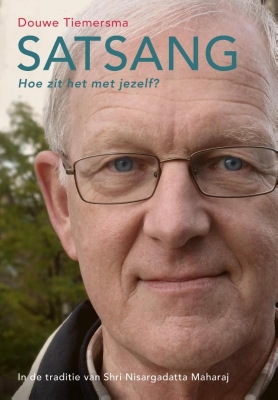
Zie voor de rest het boek Satsang van Douwe Tiemersma
http://uitgeverij-advaita.vrijeboeken.com/book/9789077194102-satsang.html
maandag 8 februari 2016
Discussion Thega vs Victor Hooftman
T. How do we undermine a projection which we are also manufacturing?
V. That was indeed my question. But you don't answer the question. Can we see that we are projecting?
T. The problem with illusion is that it is rooted in reality. as long as we talk about illusion we don't realise reality is rooted in it. reality is illusion which here does not mean there is no reality like advaita propaganda claims.
V. Some advaita people claim everything is illusion. Me too. But what is illusion? That everything is temporarily. That I see something different then you see. That we can see reality but only feel there is reality.
T. because as you see it is illusion that is creating chaotic reality. so the slogan the world is all illusion is meaningless gossip of the priviliged. the illusion the system creates using you as agent is real misery. and if the reality is an illusion, a big show, then we can always end it. Vedanta does not say reality is illusion but reality is a construction of illusion. so don't start inventing some higher reality you call atman when you fail to understand reality itself.
V. Reality can't be a construction. Reality is absolute. You use the word reality as not absolute. I use the word reality as higher reality. So we have a problem in the discussion. The daily reality is indeed a construction.
zondag 7 februari 2016
The universal opening of your own sphere (Douwe Tiemersma)
From an Advaita talk with Douwe Tiemersma, Gouda, September 19th, 2007
It’s always about the opening of yourself on all levels, your opening on the level of consciousness, but also your opening on the level of feeling. When your consciousness is low this process of opening is dependent on conditions. You can experience this dependency for example, during a vacation in a beautiful landscape. Then everything can open, you truly become one with the landscape. But it’s important to gain knowledge of these processes of opening and closing within their context, because only then does it become clear that the openness [itself] is independent of conditions and is always present.
Up to a certain point these processes are mainly mental. If you find, for example, that there is a concentration or a restriction in your attention, that there are blinders, then try looking further to see precisely what’s going on with this barrier-creating concentration. From there the attention can open up. In a very literal way you can orient yourself more spaciously, so you get a more spacious horizon. Then your orientation is no longer focused on something that consciousness bumped into, but it becomes more spacious. Just try it out: focus yourself in a concentrated way on the wall, the lamp or on something you hear. From there the whole attention can suddenly open up. This literally happens. You will need to experience it very concretely, otherwise it doesn’t work. Find out what it means to look at things and what it means when consciousness suddenly opens up infinitely in all directions. Through knowledge and practice the opening up of yourself becomes less dependent on conditions.
The advaita path can be very direct. This immediacy presupposes that you have a basis in which this openness is already present. When this sphere is clearly there, you don’t have to do anything other than relax in it. But as long as [the recognition of] this openness is not there, apparently something needs to happen. Up to a certain point a practice is needed in order to clearly reveal it. When the mind is slow and limited, something will need to happen from consciousness in order to promote this opening. When it concerns the radical openness, this openness will have to be present so strongly that it no longer disappears. This means that there will need to be a total commitment to this openness. But be careful: it is not an orientation on something. It's just an orientation on openness. It's a kind of meditation without an object. At first just hold on to awareness of ‘space’, but truly, space in its purest form, total space.
Of course it's all about yourself as instinctive feeling-awareness. Awareness and feeling will need to go together. It's your instinctive feeling-awareness that opens itself infinitely in all directions: left, right, behind, before, above, below. Take a precise look. It's an ongoing investigation. What happens when this meditation continues? Then that universal infinite-dimension remains present in all directions. It is your own sphere, your own instinctive feeling-awareness. It’s a universal opening of your self-being. This will need to be experienced very concretely. It's like a tactile sense that extends itself. Instinctively then, you'll experience everything with concrete sensitivity into infinity.
When you actually go along into the infinite, there is no separation any more between inner and outer. Then what happens to your center? Do you see that it is going to dissolve? The center of ego is no longer there, because that limited self-being is now unlimited self-being. This infinity is no longer infinitely far away; it’s incredibly close. Everything that is not infinite will dissolve.
When this infinity is everywhere, even where that center initially was, there is nothing more to do. But that only applies to this sphere. In the initial situation of limited consciousness and limited feeling of course something will certainly need to be done. Wakefulness needs to arise, so that an opening can come there. If, at that stage, you say, “I still can’t do anything for enlightenment, I’ll just sit here”, then what is your situation? Then there is closed-ness, narrowness, dullness. In this situation it’s necessary that you wake up, otherwise nothing happens. Only when this openness presents itself in such a way so that it never disappears, then there’s a release into it. That is no longer an action [of a person], it’s just a letting go of everything.
Thus the meditation on openness will have to develop so that everything is at stake, your whole existence. And then you’ll no longer say “I am meditating on something”. That would mean there is still someone who is meditating. This someone is the starting point and all kinds of things are contained in it. When it really opens up to infinity, then doesn’t everything fly away? The whole center of yourself disappears. Does it happen that way [for you]? Take a look for yourself. Does it absolutely go or does it stop somewhere?
So, when you continue, you lose yourself?
You’ll see that. It’s about yourself as instinctive feeling-awareness, who expands universally. Because it’s universal, it’s not stuck to any particular pattern. It's a little like the Big Bang. First there is a tense energy and then suddenly: the universe expanding to infinity. You can also experience it like an expanding balloon. At a certain point the balloon bursts. What happens then?
In the beginning meditation is just a little psychological trick, a technique. When you start to get serious about it, that alone already yields a lot on the psychological level. When you start with it from the situation of the I-person, then you’ll notice it’s joyful when more space comes. That’s the basis on which it continues. Still more space arises, more joy; infinite space arises, infinite joy. That [joyful space] is no longer psychological because then it’s about your own complete being. Then there is a state that is total. The psychology of the person has nothing to do with it.
(A cell phone rings)
Do you see how quickly the attention closes up again? It’s about that. About these very practical things. The processes of closing and opening in it must be clear. There should be no restriction of the conscious sphere, no matter what happens. But of course, the knowledge that is required for that must prove itself in practice.
dtiemersma | July 7, 2015 at 1:23 pm | Tags: instinctive feeling awareness, non duality and your own feeling awareness, universal feeling awareness, universal opening of of your own feeling awareness | Categories: Advaita Post | URL: http://wp.me/p29lxm-y5
Trouble clicking? Copy and paste this URL into your browser:
https://thegroundlessopenness.wordpress.com/2015/07/07/the-universal-opening-of-your-own-sphere/
For all my readers. (Victor Hooftman)
Sometimes I write in English. I see that many readers come from countries other than the Netherlands. Advaita is an international event. I know those readers not. No idea who they are. But nice that sometimes they read along. It is a fascinating world. When I was growing up there was only the newspaper and journal. Who kept you informed of what was happening in the world. Now there is personal contact. Reply consider this message as you want. Previously, you had the bottle mail, the Internet now. Insights into Advaita can now rapidly spreading. I hope that happens with happiness. Happiness is contagious. Like negativism. Always choose the messages you read with care. Choose the people you deal with care. Do not go too much with negative people. Try to be more present in the neighborhood of happy people. Combine that with wisdom and compassion. Love can not develop but feel. If you then feel stand by. Have a nice day.
Soms schrijf ik in het Engels. Ik zie dat veel lezers uit andere landen dan Nederland komen. Advaita is een international gebeuren. Ik ken die lezers niet. Geen idee wie het zijn. Maar mooi dat ze soms meelezen. Het is een fascinerende wereld. Toen ik opgroeide was er alleen de krant en het journaal. Die hielden je op de hoogte van wat er in de wereld gebeurde. Nu is er ook persoonlijke contact. Reageer eens op dit bericht als je wil. Vroeger had je de flessenpost, nu internet. Inzichten in Advaita kunnen zich nu snel verspreiden. Ik hoop dat dat ook met geluk gebeurt. Geluk is besmettelijk. Net als negativisme. Kies daarom altijd de berichten die je leest met zorg. Kies de mensen waarmee je omgaat met zorg. Ga niet teveel om met negatieve mensen. Probeer meer aanwezig te zijn in de buurt van gelukkige mensen. Combineer dat met wijsheid en mededogen. Liefde kan je niet ontwikkelen maar wel voelen. Als je het voelt blijf er dan bij. Een fijne dag verder.
zaterdag 6 februari 2016
Schoonheid (Victor Hooftman)
Schoonheid
Wat is schoonheid?
Zijn het de krokussen in de tuin?
Het roodborstje in de tuin?
De kerstversieringen in februari?
Is het diep gevoeld geluk in jezelf?
Het delen van je plekje met je katten?
De binnenkomst van je vriendin in de kamer?
Alles kan schoonheid zijn.
Jij ervaart schoonheid als de rest wegvalt.
Jij bent schoonheid.
Tot het einde van de wereld kan je reizen
Om de schoonheid thuis te ervaren.
zondag 24 januari 2016
Op de grens (Victor Hooftman)
Aandacht is richting geven. Aandacht kan gericht zijn op binnen. Permanent Awareness is niet zozeer gericht op buiten als wel op binnen. Het blijven bij het geluk, bij jezelf, bij je hart en niet buiten kan je benoemen als op de grens zitten tussen binnen in jezelf en buiten, tussen het ongemanifesteerde en de manifest. Op de grens.
zaterdag 16 januari 2016
Wijsheid en Liefde (Victor Hooftman)
Wijsheid en Liefde moeten allebei aanwezig zijn anders wordt het niets in het leven. Geluk is afhankelijk van die twee factoren. Zijn ze in balans dan Ananda mogelijk.
zondag 10 januari 2016
woensdag 6 januari 2016
Godsdiensten (Victor Hooftman)
Mooi woorden vaak hierboven. Maar godsdiensten zijn instituties. Het is geen religie (onder religie (van het Latijnse religio) wordt gewoonlijk een van de vele vormen van zingeving, of het zoeken naar betekenisvolle verbindingen, verstaan) meer. Het zijn versteende, vaak verkeerd weergegeven, inzichten, door vertegenwoordigers die belang hebben bij hun eigen posities. De naamgevers van de betreffende godsdienst zouden zich omdraaien in hun graf als zij dit nog konden zien. Het non-duale beginsel is begraven onder een laag vuil, oorlog en bloedvergieten. Dat is wat het bezwaar is tegen godsdienst. Dat is waarom ik atheĆÆst ben. Dat is waarom alleen Advaita, non-dualiteit, de moeite waard is.
zondag 15 december 2013
Je bent zelf dat oorspronkelijke licht (1), Douwe Tiemersma, Hoorneboeg, 9 oktober 2005
Ga verder terug, verder terug, verder terug. Zie je dat het licht van het bewustzijn samen gaat vallen met het licht van het hart? Als je maar ver genoeg naar achteren gaat dan zie je dat die lichten naar elkaar toegaan en samen gaan vallen. Als je dat werkelijk zo kunt ervaren dan ervaar je ook dat het een soort kernfusie is. Dan ervaar je dat het een geweldig sterke energie is, een ontzettend scherp, wit licht. Het witte licht van de bliksem, het witte licht van de kernfusie.
Ervaar je dat zo alles wordt opgeblazen door dat witte licht van duizend zonnen? Ervaar je dat er geen enkel stukje ik meer overblijft? Dat je zelf opgaat in het licht? Alles wat niet dezelfde kwaliteit heeft als dat licht, verdampt in de hitte. Zo verdampt ook het zelfzijn in dat grote. Je bent zelf dat oorspronkelijke licht, die eerste energie van de big bang. Daar komt alles uit voort, daarin keert alles terug. Wat is er dan nog over? Misschien een kosmos waarin af en toe nog wat samenklontert, maar het zijn meer beelden die zich af en toe eventjes samenstellen en weer uit elkaar vallen. Het oorspronkelijke licht blijft op de voorgrond aanwezig en je blijft het zelf, alles doordringend. Wat er ook opkomt, het komt voort uit dat oorspronkelijke licht. Door dat licht wordt alles ook weer vernietigd. Dat licht van Shiva ben je zelf. Dat intense, alles verterende vuur ben je zelf. Je kunt eerst misschien nog de notie hebben dat je in dat vuur komt, dat je in dat vuur aanwezig bent maar dan komt het oplossen. De laatste vormen van jezelf lossen op. Dus dan wordt alles blanco en toch is er intern een weten van. Het is een intern aanwezig zijn in het licht van de droomloze slaap, die lichte sfeer van de droomloze slaap. Is dat duidelijk? Oneindigheid van leeg licht dat jezelf bent, verder niets. Laat die dimensie open. Laat het aanwezig blijven. Ook wanneer er weer vormen komen.
Dat oerlicht heeft geen eigenschappen?
Nee, behalve dat het licht is en dat het heel intens is.
Maar het is toch energie?
Het heeft als licht nog energie, maar het is heel ijl en het is leeg.
Maar dat woordje intens…
In een bepaalde fase moet het heel duidelijk zijn dat dat oorspronkelijke licht een geweldig grote intensiteit heeft, zoiets als een atoomontploffing.
Daar moet je lichaam maar tegen kunnen.
Ik kan er niet tegen. Het verwondert me dat ik nog dingen zie. Je weet hoe dat ging in Hiroshima: er zijn beelden, mensen en ineens: paf, weg. Die intense hitte, dat licht.
Douwe, de vergelijking met Hiroshima vind ik niet zo aantrekkelijk. Je hoort toch ook vaak in allerlei yoga-tradities dat het heel geleidelijk gaat via het licht in de chakra’s en dan zo langzamerhand omhoog.
Dat trekt je meer aan…
Ja, heel rustig opbouwend.
Dat is duidelijk.
Kun je nog iets meer zeggen over het verschil: dat geleidelijke dat mij meer aantrekt en dat plotselinge dat jij een beetje propageert?(gelach)
Het is een verschillende benaderingswijze, dat is duidelijk. Dat het gedeeltelijk om hetzelfde gaat is ook duidelijk. Het punt bij de Advaita is dat het niet zozeer gaat om een geleidelijke ontwikkeling door al die chakra’s heen. Het is veel meer een herkennen van een diepte van dat eigen zelfzijn waarin dit speelt. Dat is de Advaita benadering. Die chakra benadering is zoiets als: ik sta hier en ik heb het idee dat de verlichting daar op dat hoogste niveau zit een dan ga ik daar zo langzamerhand naar toe klimmen, er wordt iets uitgezuiverd en dan kun je misschien de volgende stap maken, enzovoort. Maar zo werkt het niet. Hooguit kan dat dienen om de zaken wat opener, wat relaxter te maken. Vroeg of laat zal er werkelijk iets moeten gebeuren en wanneer je het in die chakra terminologie wilt benoemen dan is dat iets op het Sahasrara-niveau (kruinchakra) En dan heb je hetzelfde.
Het lijkt mij plausibel dat je toch een soort voorbereiding nodig hebt van een paar of misschien tienduizend levens.
De mensen die hier komen hebben die voorbereiding blijkbaar allemaal al gehad.
(wordt vervolgd)
donderdag 12 december 2013
dinsdag 12 november 2013
Als het denken stopt, stopt ook de tijd. (Douwe Tiemersma)
Uit een Advaitagesprek met Douwe Tiemersma, Gouda, 10 januari 2007
Als het denken stopt, stopt ook de tijd
Je bent altijd maar bezig met de zorg over dingen die je belangrijk acht. De ik-structuur heeft ook direct het element van tijd in zich. Allerlei zaken uit het verleden bepalen hoe je de dingen nu ziet en je kijkt naar de toekomst om dingen te regelen en voor jezelf in orde te maken. Altijd maar weer die structuur van het ik en de tijd. Tot op een gegeven ogenblik die tijd stopt. Het is goed je er bewust van te worden dat ook dat altijd een element is in je eigen sfeer. Er is tijd maar de tijd is ook in zekere zin gestopt. Wanneer het stil is en het denken stopt, is er dan tijd? Eigenlijk kun je niet eens ‘nee’ zeggen, want wat is die tijd eigenlijk? Het speelt helemaal geen rol. Wanneer die gewone structuur doorbroken wordt is er dat onuitsprekelijke. Er is een open sfeer waarover je niets kunt zeggen. Als bewust-zijn kun wel een besef hebben van dat onzegbare. Dat zelfzijn gaat dus verder dan de tijd. Dat is een conclusie, je kunt het direct vaststellen. Klopt dat? Zeg het voor jezelf ook nog maar eens: dit zelfzijn gaat veel verder dan de tijd. De tijd mag stoppen. Er komt een sfeer van onuitsprekelijkheid, maar het heeft toch nog een kwaliteit van zelfzijn, bewust-zijn. Dat zelfzijn heeft dus duidelijk geen structuur meer van het ego dat altijd in de tijd aan het werk is en zit te denken. Die structuur valt weg en er komt ineens die opening en die sfeer waarover je niets kunt zeggen. De zorgstructuur valt weg.
Voor het denken is dit een onmogelijkheid. Dat denken denkt in de tijd en kan zich niet voorstellen dat de tijd stopt. Dan gaat het zeggen: wat is er voorbij die grens van de tijd? Dat wordt gedacht binnen die sfeer van de tijd en daar zit nu juist de beperking van het denken.
Zie je dat af en toe de tijd verschijnt en weer verdwijnt en dat de tijd niet echt nodig is? Het kan verschijnen en mag verschijnen, maar de beperking van die tijdssfeer is duidelijk. Ergens ontstond de tijd met een bepaalde gerichtheid van het leven, van de persoon. Wanneer die gerichte structuur verdwijnt, dan is er geen tijd meer. Die hele structuur verdwijnt, dus is er geen sprake meer van dat er iets moet gebeuren. En wanneer er iets gebeurt dan ontrollen de gebeurtenissen zich in de tijd, maar je ziet hoe wisselend die tijdservaring dan is. Soms duurt een dag eindeloos, soms zijn een paar jaar zo voorbij. Je ziet hoe betrekkelijk die tijdservaring is.
De tijd van de klok, de agenda en de kalender zien we meestal als iets absoluuts. Is dat ook zo? Het is natuurlijk ook maar een projectie. Vanuit die wisselende tijdservaring ga je er iets uithalen en dan zeg je: dit is de absolute tijd en die andere tijdservaringen zijn maar ervaringen. Wanneer die projectie van een absolute tijd doorzien wordt als een constructie dan kom je toch weer terug op een tijdservaring, en die kan dus wisselen. Soms gaat de tijd ontzettend snel, soms ontzettend traag en wanneer je helder blijft, blijkt dat de tijd ook in het alledaagse persoonlijke leven vaak helemaal niet aanwezig is. Meestal denk je niet aan de tijd. Als het wel zo is, is het niet best. Wanneer je intern helder blijft, ook bij het doen van allerlei werkjes, dan zie je: meestal is er geen tijd. Achteraf zeg je dan: oh, het is al twaalf uur. Dan ga je het weer terugkoppelen op die absolute tijd in die projectie van klok en dan zeg je: ik ben twee uur bezig geweest. Maar dat is dus weer het denken achteraf. Je ziet hoezeer dat denken helemaal verweven is met de tijd. Als het denken stopt, stopt ook de tijd. Gedeeltelijk is er nog een gevoelsmatig stromen en in dat gevoelsmatig stromen ervaar je al een stuk vrijheid van de tijd. Op een gegeven moment besef je dat er iets in jezelf aanwezig is dat niet onderworpen is aan de tijd ook niet aan dat stromen. Voor zover er verschijnselen zijn komen die op en verdwijnen weer. Tijd heeft met verschijnselen te maken. Verschijnselen zijn betrekkelijk, tijd is betrekkelijk. Het punt is dus dat je intern bewust blijft van dat vrij-zijn van de tijd . Dat het een open sfeer is die onuitsprekelijk is. Als dat herkend wordt krijg je van daaruit heel gemakkelijk het oplossen van identificaties met alles wat zich in die tijd afspeelt.